
1- What is Conversational Marketing?
2- Conversational Marketing Statistics you need to know in 2022
3- Benefits of Conversational Marketing
4- Chatbots & Conversational Marketing
5- Conversational Marketing Framework
6- Conclusion
What is Conversational Marketing?
Conversational marketing is gaining popularity. This is because one of the most effective ways for businesses to acquire new customers and maintain strong relationships with existing ones is through consistent communication.
Conversational marketing, as the name suggests, is the direct engagement of businesses and customers through a variety of available media. It is a one-to-one marketing strategy in which customization serves as the marketing plan’s pivot.
Conversational marketing is a customer-focused strategy that focuses on dialogue. It enables marketers to increase consumer engagement, improve customer experience, and increase revenue. So, how do you incorporate it into your long-term marketing strategy?
Every day, brands and customers interact, but these interactions are not always effective. Real-time one-on-one interactions across multiple platforms allow you to cultivate relationships that are critical for improving online client experiences. Customers nowadays expect instant answers to their questions; chatbots, live chat, and messaging apps are perfect for this!
Understanding your customers’ preferred communication channel is critical to your conversational marketing campaign’s success. Chatbots and live chat, for example, provide an informal interaction that simulates a casual conversation, whereas messaging apps such as WhatsApp enable more meaningful conversations, which is especially useful when learning more about a product or service.
Businesses use a variety of strategies and technologies to accomplish this efficiently. Email, social media, traditional media, and other channels are well-known and have long been in use. While these platforms have helped business owners grow their audiences and communicate with them over time, they are not without flaws.
A powerful strategy for enhancing user experience and increasing website revenues is conversational marketing.
We’ll explore everything you need to know about the 2022 Ultimate Guide to Conversational Marketing in this blog.
Conversational Marketing Statistics you need to know in 2022
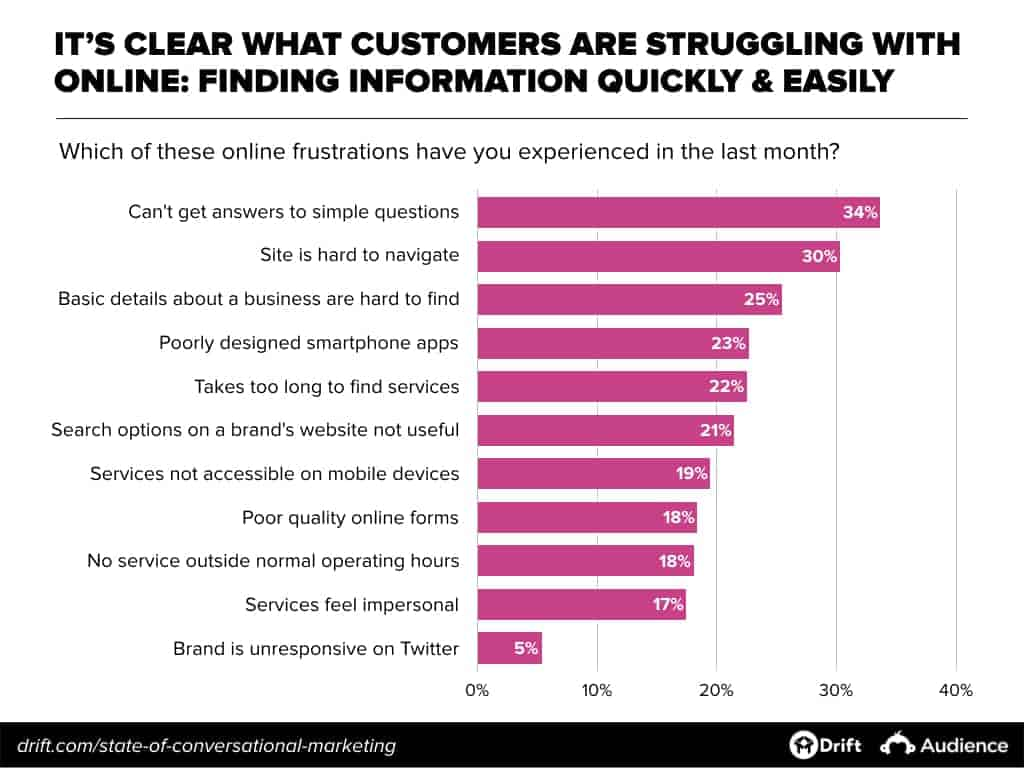
- 66% of consumers prefer to reach brands through messaging apps: Chief Marketer
- 45% of businesses have implemented conversational marketing as part of their marketing efforts: HubSpot
- Over 300,000 messenger bots are active on Facebook: Social Media Today
- 82% of consumers believe that an immediate response is very important when they have sales or marketing-related questions: HubSpot
- About half (46%) of Americans use digital voice assistants on their smartphones: Pew Research Centre
- 86% of consumers prefer to use a chatbot than filling a form on a website: Drift
Benefits of Conversational Marketing
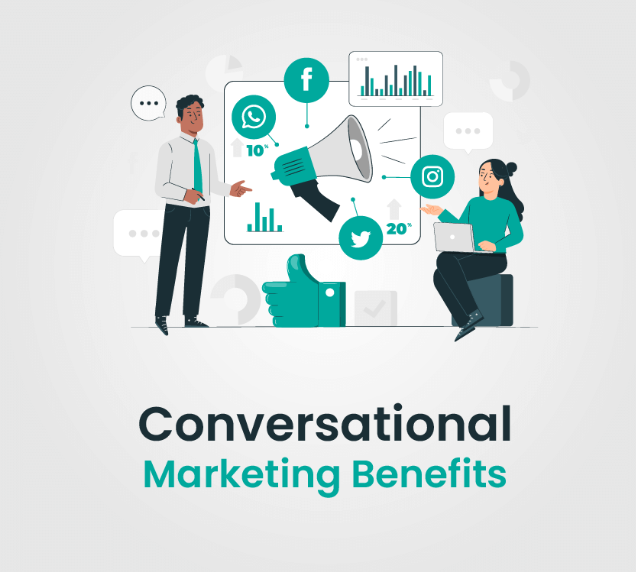
First and foremost, it’s crucial to emphasize that incorporating conversational marketing into your inbound marketing plan need not cause any disruptions to your current business procedures. Indeed, it can supplement what is already working for your company in terms of lead generation, sales, and customer service.
Conversational marketing has the following advantages:
1. Helps You to Learn More About Your Prospects and Customers
Conversational marketing should be used in your company if you want to understand your prospects’ and customers’ pain points. This is because it allows you to establish a rapport with your customers and gain a better understanding of their concerns and preferred products.
For instance, if you own a content marketing company and use a chatbot, you could simply qualify a prospect before they buy from you.
You can program the chatbot to ask them questions like:
- How may I help you today?
- Why do you want to implement content marketing as a strategy?
- What type of content do you want us to create for you?
- What’s your budget for each piece of content?
- How many pieces of content do you need per month?
You can learn more about your prospects and determine whether they are a good fit for your company by asking these questions.
You’ll also understand their pain points and how your services can help their business thrive.
2. Provides Your Customers with an Avenue to Get Answers in an Exciting Way
Conversational marketing enables you to please your customers while also improving communication with them. Most people nowadays would rather have a chatbot answer their questions than read your website content.
Furthermore, with consumers spending more time on their mobile phones than ever before, conversational marketing will allow you to communicate with them more effectively. According to Flurry data, US mobile phone users spend more than 5 hours per day on their devices.
3. Great for Converting Leads to Sales Faster
When you use traditional methods of communication with your prospects, such as lead forms and email options, it takes time to convert leads to sales.
This is because your employees must manually go through the form, qualify the prospects, and then contact them via email or phone. This takes time, but you could turn a qualified lead into a sale in as little as 14 days. Conversational marketing cuts the sales cycle in half, allowing you to move more leads into your sales pipeline faster.
4. Exciting Way to Build Relationships With Your Customers
If you want to build stronger relationships with your current clients and prospects, use conversational marketing in your business. The explanation is simple. Conversational marketing systems promote continuous contact with your customers in ways that they are likely to appreciate.
Consider this scenario: you want to buy a new gadget at home and you visit two websites.
Website A provides you with all of the product information before urging you to buy.
Website B, on the other hand, provides you with product specifications as well as a comprehensive comparison with other similar products before prompting you to connect with a live person who takes the time to explain the advantages and disadvantages of each product to you. Which of these websites are you most likely to purchase from? I’m sure you prefer the first option.
When done correctly, conversational marketing can help you build strong relationships with prospects who will eventually convert into leads. By incorporating live chat as a communication channel, Hubspot was able to generate 20% more qualified leads for their company.
Chatbots & Conversational Marketing
Chatbots and conversational marketing are distinct concepts. Additionally, there are various digital assistants (such as Google Assistant, Alexa, Cortana, and Siri) that are developing conversational AI technologies.
We can connect with search engines in the following 3 ways in addition to asking chatbots questions:-
Text search
Voice search
Image search
Marketers who want to use “Voice Assisted SEO” tactics might focus on the voice-based search of the three categories listed. Therefore, marketers must switch their attention from chatbots to voice-assisted search when “organic search” is involved.
What if a chatbot promoting a specific product appeared on your browser screen and interacted with you without you realising it was an advertisement?
“Conversational Display Ads” are a new invention from Google-incubated Adlington.
The graphic above clearly shows that the company will have a new digital channel to promote its products through a conversational experience. Marketers will have access to analytics data on “buyer intent,” “previous experience,” and “demographic facts” with a limited number of conversational advertisements on various platforms.
Adlington is a platform where advertisers can combine chatbots with their display ad format. It’s worth noting that Adlingo has no ownership or control over any chatbots.
They simply allow marketers to use partner chatbot platforms such as Dialogue Flow, Microsoft Framework, Live Engage, Valassis Digital, and Live Person to create conversational ad experiences. Adlington uses the programmatic model to serve ads through the Google ad network. Marketers will be charged using the CPM pricing model for all conversational ad campaigns.
Conversational Marketing Framework
This is the first step in establishing contact with website visitors. Rather than using intrusive pop-up ads or time-consuming lead generation forms, you can create a chatbot that engages website visitors in polite dialogue.
Chatbots are an excellent solution because they can be tailored to your brand’s voice and the behavior of your target audience. They can be programmed or powered by artificial intelligence.
Everything is determined by the chatbot’s script and the user’s intent. This discussion may lead to your audience entering your sales funnel as leads or as brand-new clients.
Chatbots are extremely powerful because they are automated and can provide service around the clock. You can also change the topic of the conversation based on a variety of factors. Chatbots can be used as a customer service tool, answering questions about your products or services, or as a lead generation and sales tool, collecting emails and guiding your users through the buying cycle.
Thanks to evolving AI technologies, chatbots will soon be able to fully communicate with visitors to your website. As a result, they will be able to effectively address the vast majority of queries and problems currently handled by customer service representatives.
The goal of this phase is to determine who your target audience is. To streamline this procedure, you must perform client segmentation to ensure that you only focus on quality leads. Previously, your sales team had to devote a significant amount of time and effort to this process. However, thanks to AI, you can now create and sustain a relationship with your leads by implementing the proper marketing automation system for your email nurturing.
There are numerous methods for qualifying and segmenting leads. To begin, you can create a chatbot that allows them to select one of the available options or responses. To better meet their needs, you can tailor the material and make offers based on their responses. All you need to do is create the appropriate chatbot script to ask qualifying questions and obtain this information.
Chatbots can automatically track the behavior of visitors to your website without the need for human interaction. You don’t need to use sophisticated analytics systems because chatbots can instantly segment your audience based on your chosen properties.
Finally, you can create so-called conversational landing pages where members of your team may interact directly with prospects and provide personalized responses to each of their questions via a chatbot or live chat.
The third and final stage is recommended. When your chatbot starts interacting with website visitors and collecting information about them, it may be time to delegate the situation to a human. The advantages of using bots are that they can perform simple, repetitive tasks and learn your audience’s preferences. However, human interaction may be required to move them through the funnel to the final purchase stage.
After gathering all pertinent information, your sales team will have a much better understanding of all customer categories, including how they behave and what they expect. Your sales representative can eventually convert your prospects into customers by personalizing the buying process. When your chatbot has passed the automatic qualification stage, you can program it to offer a call or chat with your sales representative.
From this blog, we’ve learned a lot about conversational marketing. We made an effort to comprehend its significance, benefits, strategies, and measurement metrics. You should take advantage of this opportunity because this marketing strategy is becoming increasingly popular. Buyers also expect their experiences to be tailored to their specific needs and preferences. Conversational marketing is an excellent way to achieve this without significantly altering your overall marketing strategy.
Contact Us For Digital Marketing Services.